Full Committee Hearing: “From Policy to Progress: How the National Quantum Initiative Shapes U.S. Quantum Technology Leadership,” U.S. House Committee on Science, Space, and Technology, May 7, 2025.
Video of the hearing: https://www.youtube.com/watch?v=TH2dZAw6FnM (embedded below)
Testimony
Archived PDF: Tahan-Written-Testimony-2025.pdf https://docs.house.gov/meetings/SY/SY00/20250507/118196/HHRG-119-SY00-Wstate-TahanC-20250507.pdf
Also published on Microsoft On the Issues: https://blogs.microsoft.com/on-the-issues/2025/05/07/quantum-technology/ Archived PDF: Supporting American leadership in quantum technology - Microsoft On the Issues.pdf
Oral testimony
My opening remarks as delivered, first posted on LinkedIn as Oral Testimony (May 8, 2025).
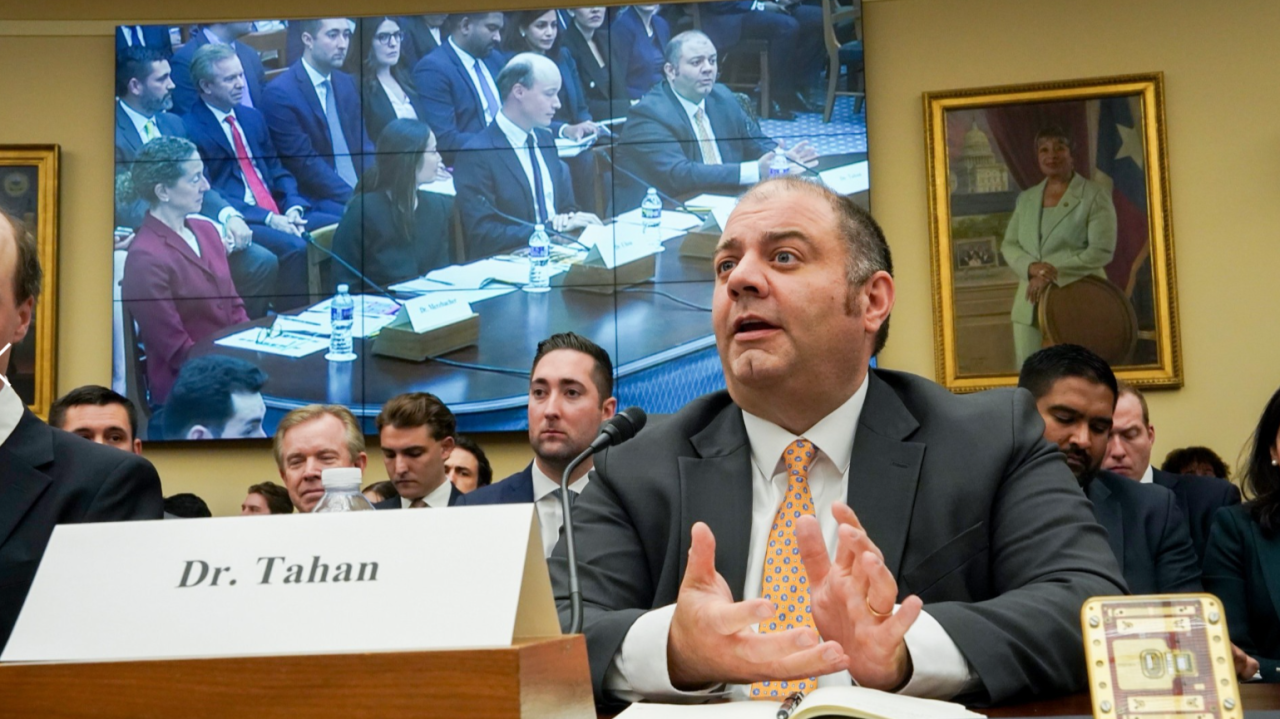
Charles Tahan, U.S. House Committee on Science, Space, and Technology: “From Policy to Progress: How the National Quantum Initiative Shapes U.S. Quantum Technology Leadership”, 5/7/2025
Chairman Babin, Ranking Member Lofgren, and Members of the Committee, thank you for the opportunity to discuss the importance of quantum technology and the transformative role it will play for this country and for our collective future.
It’s an honor to be here again. I first appeared before this Committee about two years ago when I was the Assistant Director of Quantum Information Science and Director of the National Quantum Coordination Office, an office that was created by the National Quantum Initiative Act.
My job then was to coordinate the more than 20 agencies to develop and execute a national strategy to strengthen American leadership in quantum information science and technology. My time at OSTP capped a 17-year career as a practicing physicist and technical leader at the NSA and DARPA.
My job now is to lead technical teams at Microsoft that are working both internally and with our close partners to build the world’s first useful quantum computers.
Seven years ago, the National Quantum Initiative Act recognized that we were on the cusp of a new technological revolution where we could harness the more advanced and unusual properties of quantum to enable new science and to solve real problems.
I like to think of quantum as the operating system of the universe. What we physicists call quantum mechanics are just the rules that the universe follows at the microscopic level. We are now building tools that take advantage of these quantum effects to create fundamentally new types of information technology like quantum computers, quantum networks, and quantum sensors.
But even in the two years since my last appearance before this Committee, the world has changed dramatically. And because of this, we must urgently recommit to investing in quantum science as a Nation. We must also take action to bring these scientific discoveries out of the labs and into people’s lives.
This year in particular has been a historic one for quantum information science. The community, including Microsoft, Quantinuum, Atom Computing, Google, and leading groups in China, have proven through demonstrations of error correction on prototype quantum computer systems that scaling to stable quantum machines is possible. I’ve waited my entire career for this milestone.
We have also witnessed the remarkable rise of artificial intelligence, with profound implications for the productivity of the human race. Despite this potential, quantum science has taught us that today’s “classical” computers—no matter how powerful—are unable to match quantum for certain problems. Quantum and AI are in fact complementary, and we are still learning how they can help each other.
The Microsoft quantum team has been steadily investing in quantum computing for over 20 years. We build both quantum hardware and the software to power it. We believe there is great value in working on hard problems.
And our vision moved closer to reality earlier this year when we unveiled new technical results that begin to validate our unique approach toward a topological quantum computer. This roadmap is embodied in the Majorana 1 chip that I have here, which brings together the key components needed to build a quantum supercomputer. The team is proud of it.
We are also proud to have been selected for the final phase in DARPA’s quantum benchmarking initiative after a thorough evaluation process that included experts from DOE’s National Labs.
While Microsoft has made significant investments in quantum, the efforts of individual companies alone are not sufficient for the United States to win the quantum race.
Governments around the world are making deep investments and the United States must show leadership by continuing to invest in quantum to advance scientific discovery, to develop technical expertise, and to build a resilient supply chain. We must also continue to partner with our trusted allies. We face the real possibility that China can outcompete us if we do not.
I offer three specific recommendations with more details in my written testimony:
First, Congress should reauthorize and expand the National Quantum Initiative programs. We must prioritize our research funding institutions, particularly the DOE, the NSF, NIST, and NASA along with the DOD and the Intelligence Community. These agencies create programs that bridge the “valley of death” from the lab to the markets, everything from new ideas to purchasing novel computers for the community to use. America’s great scientific institutions are unmatched in the world and there is no private sector substitute.
Second, Congress must prioritize efforts to expand the quantum talent pool. This includes everything from K-12 education to attracting and retaining the world’s most innovative minds. Today, there is a severe global shortage of quantum talent and other countries are aggressively developing and recruiting talent. We must do the same, and more.
Third, Government must take action to create a reliable supply chain for quantum. This includes opportunities for federal, state and local governments to work with industry to form public-private partnerships to onshore fabrication and prototyping facilities, and ensure materials and components are more easily available.
In closing, quantum technology promises to redefine the next era of human progress. The United States must act with urgency to ensure our continued leadership for the next hundred years.
Thank you and I look forward to your questions.
Bio
Archived PDF: Tahan-Testimony-Bio-2025.pdf https://docs.house.gov/meetings/SY/SY00/20250507/118196/HHRG-119-SY00-Bio-TahanC-20250507.pdf
Hearing Charter
Archived PDF: House-Science-Hearing-Charter-2025.pdf https://docs.house.gov/meetings/SY/SY00/20250507/118196/HHRG-119-SY00-20250507-SD002.pdf
All hearing documents: https://docs.house.gov/Committee/Calendar/ByEvent.aspx?EventID=118196
Livestream
Original Link: https://www.youtube.com/watch?v=TH2dZAw6FnM